Showing posts with label choux. Show all posts

Monday, June 25

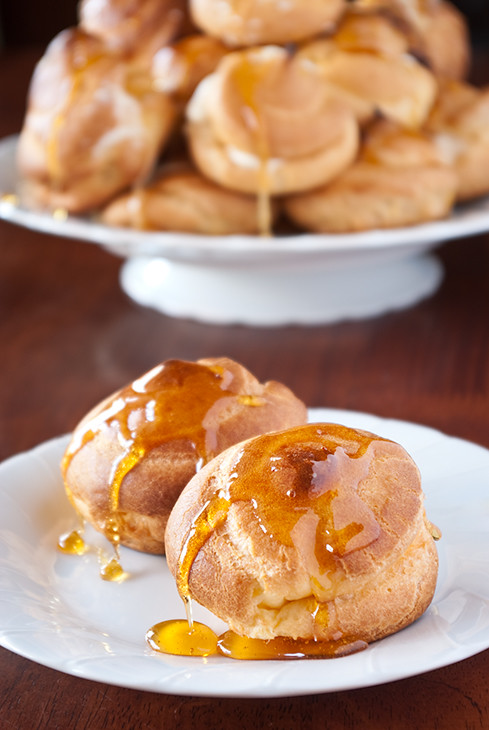
Orange profiteroles

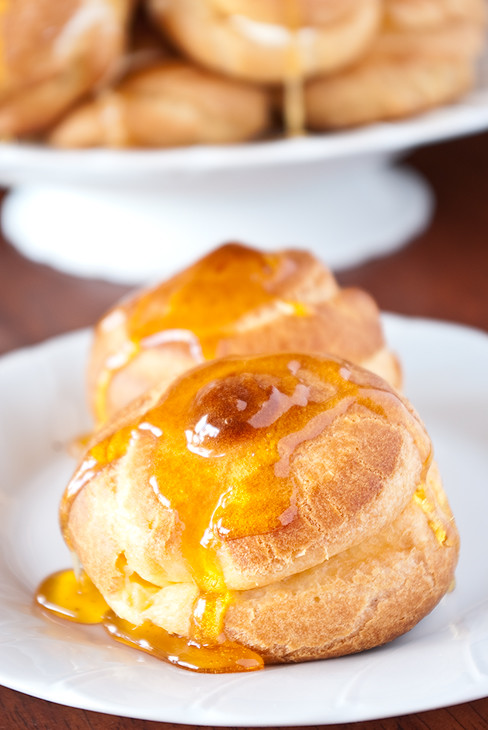
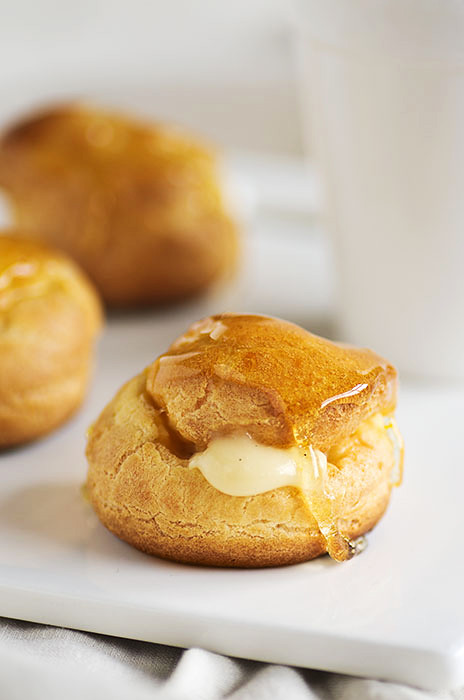
orange profiteroles

I'm a sucker for anything that contains custard and pastry, and in you add caramel to the combo I'm pretty much in heaven. So, it's no secret that I love profiteroles.

That being said, I don't make them quite as much as I would like. There's a good reason for this and it's not because they're complicated, it's because when I do make them I can't resist eating them. All of them. In a very short period of time.

For this reason, I only make them for friends. Sure, I still devour the delicious morsels but instead of eating the whole batch I only get 2 or 3. Sure, I'd like to eat them all but there aren't enough hours in the day to work off all those eggs or enough toothpaste to brush away all that delicious caramel.
orange profiteroles

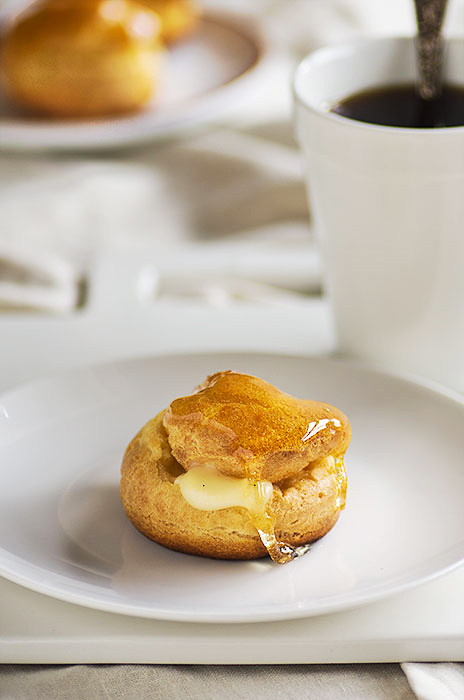
Essentially what I'm saying is there's nothing good in a profiterole but it's okay because they're delicious. These ones are especially delicious as they have a subtle orange flavour. Essentially they're just a variation of these ones with a slightly better pastry cream recipe.

And yes, my bottoms got a little brown - hopefully yours won't do the same!

Orange profiteroles

adapted from Gourmet Traveller, July 2007 and The Art and Soul of Baking

Makes about 16

Orange pastry cream
  • 170ml (1 1/2 cups) milk
  • Grated zest of 1 orange
  • 1 large egg
  • 2 large egg yolks
  • 6 tablespoons castor sugar
  • 60ml (1/2 cup) orange juice
  • 35g (1/4 cup) plain flour
  • 30g (2 tablespoons) cold unsalted butter

Combine the milk and orange zest in a medium saucepan and heat until the mixture just begins to simmer. Remove from the heat and let it steep for at least 30 minutes.

Strain the milk and zest mixture and return to a clean saucepan. Heat the milk just below boiling point and remove from the heat.

In a separate bowl, whisk together the egg, egg yolks, and sugar until well blended. Add the flour and orange juice and whisk until very smooth. Pour 1/2 a cup of hot milk into the yolk mixture, making sure you whisk constantly. Slowly pour the yolk mixture back into the remaining hot milk, whisking all the while

Heat the mixture, whisking constantly to prevent lumping, until it reaches the boil. Continue cooking for a about a minute or until the pastry cream is very thick. Remove from the heat and whisk in the butter. Stain the mixture into a clean bowl.

Press a piece of plastic wrap directly on to the surface of the hot pastry cream. Set the bowl in a bowl of water and cool to room temperature. Once cool, use or store in the refrigerator until required

Choux pastry
  • 100g (3.5 oz) unsalted butter, coarsely chopped
  • 1 tsp salt
  • 250ml (1 cup) water
  • caster sugar
  • 150g (1 cup) plain flour
  • 4 eggs

Preheat the oven to 220°C (430°F), line a large tray with baking paper.

Combine butter, salt, water, and sugar in a large sauce pan and bring to the boil over high heat. Add the flour and stir continuously with a wooden spoon until the mixture comes together in the centre of the pan. Remove from the heat and stand for 5 minutes.

Add the eggs, one at a time, beating with the wooden spoon after each addition. The mixture will become matte when the egg is fully incorporated.

Spoon mixture into a piping bag fitted with a large 1cm (1/2 inch) nozzle. Pipe 5cm-diameter mounds about 4cm high on the paper-lined oven tray. Bake for 15 minutes and then reduce heat to 180°C (350°F) for another five minutes. Remove from oven and carefully transfer to a wire rack. Cool to room temperature.

Orange caramel
  • 140g (5 oz) caster sugar
  • 50ml (1/8 cup) lemon juice
  • 75ml (1/4 cup) water

Combine the sugar, lemon juice, and water in a small saucepan and stir over medium heat until the sugar has dissolved. Increase heat and bring to the boil, cook for 5-6 minutes or until the mixture in a caramel colour. Remove from heat.

To assemble the profiteroles

Before cooking the caramel, fill a piping bag fitted with a 0.5cm (1/4 inch) plain nozzle with pastry cream. Insert the nozzle into a profiterole and squeeze the bag to fill. Set aside on a plate or wire rack.

Cook the caramel, careful dip the tops of the profiteroles in it and arrange the finished profiteroles on a plate. Serve fresh.
Thursday, November 25

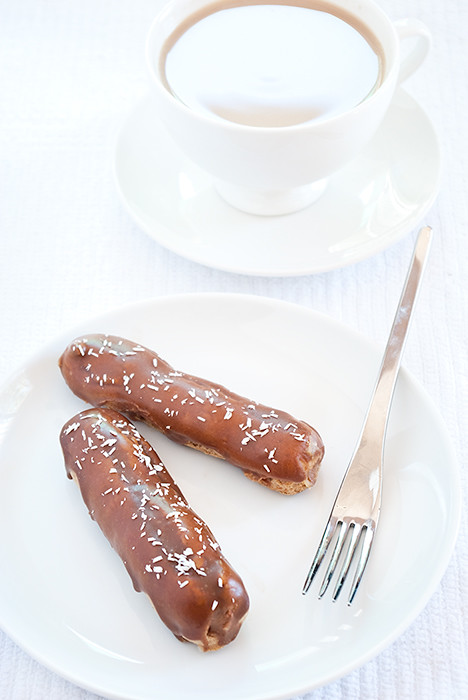
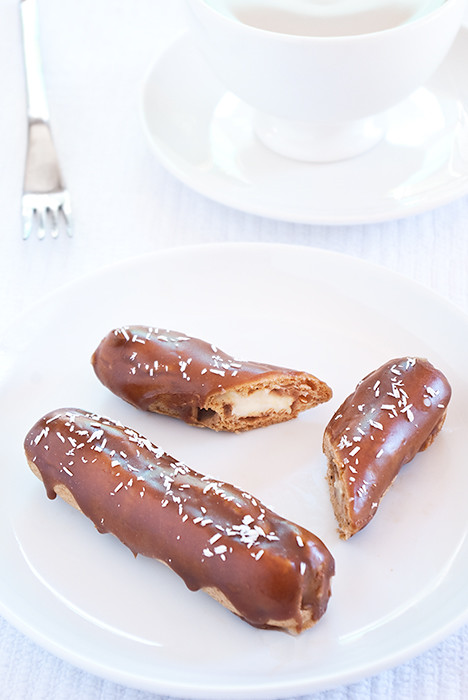
Spiced éclairs with milk chocolate glaze

Spiced Chocolate Eclairs

Éclairs, éclairs, éclairs- you much maligned things. It's not your fault you're sometimes deemed as boring or passé. It's really not, and I know those hurtful words are untrue. I hope one day you become as popular as the macaron and there's a global trend to make you in all different flavours and wacky shapes. You deserve it. I wish my rendition of you would start this trend but alas, I have broken no new ground today.

Regardless, these éclairs are all round delicious and incredibly easy. A few months ago I was shocked to discover just how simple choux pastry was. I thought "wow, this couldn't be easier, why was I so afraid?" Little did know an easier recipe does exist because this recipe uses a stand mixer. A stand mixer! You don't even have to bet the eggs into the cooked dough yourself, seriously. It's that simple.

That being said, I actually like the other recipe better but maybe that's because I made it in a better kitchen, with better things, and a better oven. So it just seems better. Or maybe it was just a better recipe - I'm leaning towards the latter.

11_10---Spiced-Eclairs-2

Spiced éclairs with milk chocolate glaze

(adapted from The Art & Soul of Baking)

Vanilla crème pâtissière

375ml (1 1/2 cups) milk
1 vanilla bean
1 large egg
2 large egg yolks
85g (6 tablespoons) sugar
35g (1/4 cup) plain flour
30g (2 tablespoons) unsalted butter, cold

Pour the milk into a medium saucepan. Use the tip of a paring knife to cut the vanilla bean lengthwise. Turn the knife over and use the dull side to scrape the seeds into the saucepan, then add the pod. Heat the mixture until it just begins to simmer. Remove from the heat and let steep for 30 minutes.

Heat the milk to just below boiling point and remove from the heat. In a medium bowl, whisk together the egg, egg yolks, and sugar until well blended. Add the flour and whisk vigorously until the mixture is very smooth. Pour 125ml (1/2 cup) of the hot milk mixture into the yolk mixture, whisking constantly to temper the eggs. Slowly pour the yolk mixture into the remaining hot milk, whisking all the while.

Heat the mixture, whisking constantly to prevent it from lumping, until it reaches a boil. Continue to cook and whisk for another minute, until the pastry cream is very thick. Remove from the heat and whisk in the butter. Strain the cream through a fine strainer set over a medium bowl to remove any lumps.

Press a piece of cling wrap directly on to the surface of the pastry cream, then set aside to cool to room temperature. Once the pastry cream as completely cooled, transfer it to the refrigerator until required.

Pâte à choux

115g (4 oz) unsalted butter, chopping into 1cm (1/2") pieces
250ml (1 cup) water
1/4 teaspoon salt
140g (1 cup) plain flour
1 teaspoon cinnamon
1/4 teaspoon ground cloves
1 teaspoon sugar
4 large eggs, plus one egg extra

Preheat the oven to 200°C (400°F) and position two racks in the top and lower thirds of the oven. Line two trays with baking paper.

Cook the butter, water, and salt in a medium saucepan, stirring from time to time to ensure the butter melts evenly. When the butter as melted, increase the heat and bring to the boil. Immediately remove from the heat and add the flour, cinnamon, cloves, and sugar all at once. Beat vigorously with a wooden spoon until the dough comes together in a mass around it. Place the pan back over medium heat and continue to cook, beating it until the dough has dried out slightly and a thin film forms on the bottom of the pan, about a minute.

Transfer the dough to the bowl of a stand mixer. Beat on medium speed for 1 minute to slightly cool the dough. In a medium bowl, beat the 4 eggs together until you can't distinguish the yellow from the white. With the mixer on medium, add the eggs a couple of tablespoons at a time, allowing each addition to blend completely before continuing. When the eggs are incorporated, the mixer should be shiny and elastic.

Spoon the dough into a pastry bag fitted with a 1.25cm (1/2 inch) plain round tip. Pipe the dough into 12cm (4") by 2.5cm (1") rectangles. To disconnect the flow of dough slice a lightly oiled knife across the opening of the tip.

Lightly beat the remaining egg to blend thoroughly. Brush a light coating over the top of the piped dough, being careful that the egg does not drip down the sides as it will glue the eclairs to the baking paper. Bake both trays of eclairs for 20 minutes, then reduce the temperature to 180°C (350°F) and switch the trays between the racks. Bake for a further 20 minutes. Reduce the oven temperature again, to 150°C (300°F) and bake for 10-15 minutes longer to dry out the insides. The éclairs should be deep brown. Remove from the oven and transfer the eclairs to a rack to cool.

When completely cool, spoon the crème pâtissière into a clean and dry pastry bag fitted with a bismarck or plain 0.5cm (1/4") plain tip. If using a bismarck tip, make a small hole in one of the short ends of the éclair. Then, insert the end of the bismarck as far as it will go. Squeeze firmly as you slowly pull the tip out of the pastry. If using a plain tip, make two evenly spaced holes in the bottom of an éclair with the tip of a paring knife. Insert the plain tip into each one, squeezing firmly to fill the centre. Repeat to fill remaining éclairs.

Milk chocolate glaze

115g (4 oz) milk chocolate, finely chopped
125ml (1/2 cup) heavy whipping cream

Place the chocolate in a small bowl that is wide enough to accommodate an éclair. Bring the cream to the boil in a small saucepan. Immediately pour over the chocolate and let the mixture sit for 1 minute. Whisk the mixture until it is completely smooth and blended. Cool for 10 minutes before using.

Turn the éclairs upside down, dip the top of each one halfway into the chocolate glaze, then lift it and let the excess drip back into the bowl. Set the éclair right side up on a serving platter or lined baking tray and allow to set for 30 minutes. Refrigerate until required.

Wednesday, July 14

Profiteroles with lemon cream

Profiteroles with Lemon Creme

This is the second time I've tried to make profiteroles. The first time was around two and a half years ago and they were a disaster. Somehow I managed to make 2.5cm (1 inch) rounds that were completely solid. They were like little rocks. I have no idea what went wrong but from then on I was too nervous to try again.

I've grown up since then and conquered many of my bizarre fears; I no longer duck and cover when a magpie even glances my way, I've learnt that duck bites don't actually hurt, I finally believe that the sea can only rise so much during high tide, and, most recently, that profiteroles aren't out to get me. In fact, profiteroles are quite easy.

Except my pastry cream was a disaster, you can't have everything I suppose. It tasted good, so that's a plus one but it was a weird consistency so that's a minus one.

No one cared though, I took these to my friends house as an after dinner snack and all sixteen of them and they were gone in the blink of an eye. It feels good to see a plate cleared completely, they even ate the caramel that had stuck to the plate!

07_10-Choux-with-Lemon-Pastry-Cream2

This recipe was a bit unclear to follow, Gourmet Traveller sometimes formats their recipes a bit funny. I've reworked it a bit so that all the mistakes I almost made don't happen to you. There's nothing more infuriating than getting halfway through a recipe, realising you have 100gm of sugar that you haven't used yet, and not having a clue what to do with it. It just causes freak-outs and freak-outs are best avoided.

Profiteroles with lemon cream

adapted from Gourmet Traveller, July 2007
makes about 16

Lemon cream filling

200ml (7 fl oz) milk
20ml freshly squeezed lemon juice
6 pieces of lemon rind, removed with a peeler
3 egg yolks
40g (1.5 oz) caster sugar
15g (0.5 oz) cornflour
200ml (7 fl oz) double cream

Combine the milk, lemon juice, and lemon rind in a saucepan and bring to just below the boil. Remove from heat and stand for 15 minutes to infuse.

Combine the egg yolks and sugar and whisk for 2-3 minutes, add the cornflour and whisk to combine. Return milk mixture to the heat, bring to just below the boil and strain over the egg mixture. Whisk to combine, then return the mixture to the pan.

Whisk mixture of medium heat for 3-4 minutes, or until thick and smooth. Transfer to a bowl and cover closely with plastic wrap, cool to room temperature then refrigerate until cold. When completely cold, whisk to break up slightly, add the cream and whisk until thick and smooth. Refrigerate until required.

Choux pastry

100g (3.5 oz) unsalted butter, coarsely chopped
1 teaspoon salt
250ml (1 cup) water
30g (1 oz) caster sugar
150g (1 cup) plain flour
4 eggs

Preheat the oven to 220°C (430°F), line a large tray with baking paper.

Combine butter, salt, water, and sugar in a large sauce pan and bring to the boil over high heat. Add the flour and stir continuously with a wooden spoon until the mixture comes together in the centre of the pan. Remove from the heat and stand for 5 minutes.

Add the eggs, one at a time, beating with the wooden spoon after each addition. The mixture will become matte when the egg is fully incorporated.

Spoon mixture into a piping bag fitted with a large 1cm (1/2 inch) nozzle. Pipe 5cm-diameter mounds about 4cm high on the paper-lined oven tray. Bake for 15 minutes, then reduce heat to 180°C (350°F) for another five minutes. Remove from oven and carefully transfer to a wire rack. Cool to room temperature.

Lemon caramel

140g (5 oz) caster sugar
50ml (1/8 cup) lemon juice
75ml (1/4 cup) water

Combine the sugar, lemon juice, and water in a small saucepan and stir over medium heat until the sugar has dissolved. Increase heat and bring to the boil, cook for 5-6 minutes or until the mixture in a caramel colour. Remove from heat.

To assemble the profiteroles

Whist the caramel is cooking, spoon cooled lemon cream into a piping bag fitted with a 0.5cm (1/4 inch) round nozzle. Pipe lemon cream into choux puffs and place on a plate or return to the wire racks. Once the caramel is cooked, careful dip the tops of the profiteroles in it and arrange the finished arrange profiteroles on a plate. Serve fresh.